e-nviroGreen: Rooted in an Idea, Built by Experience
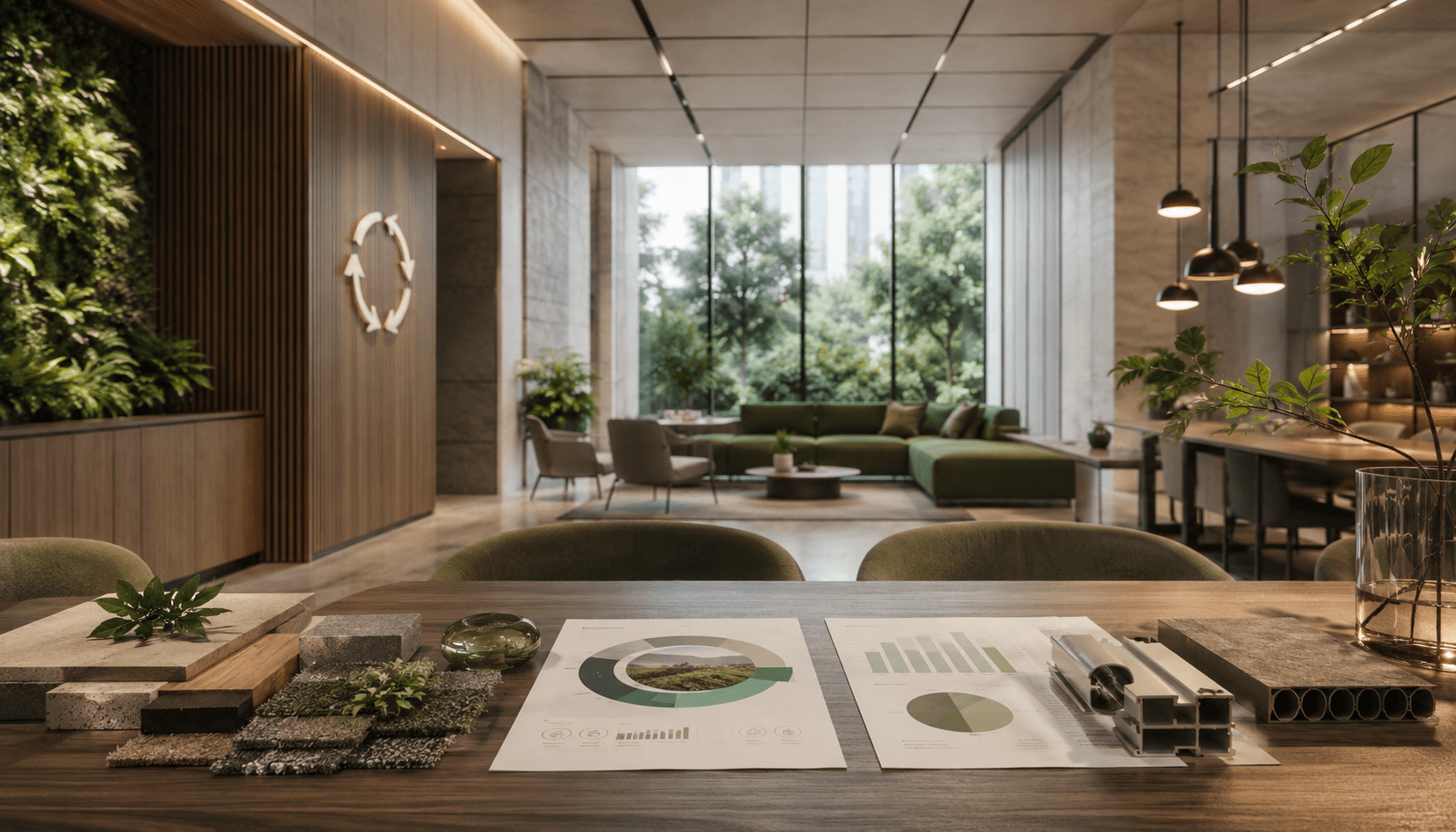
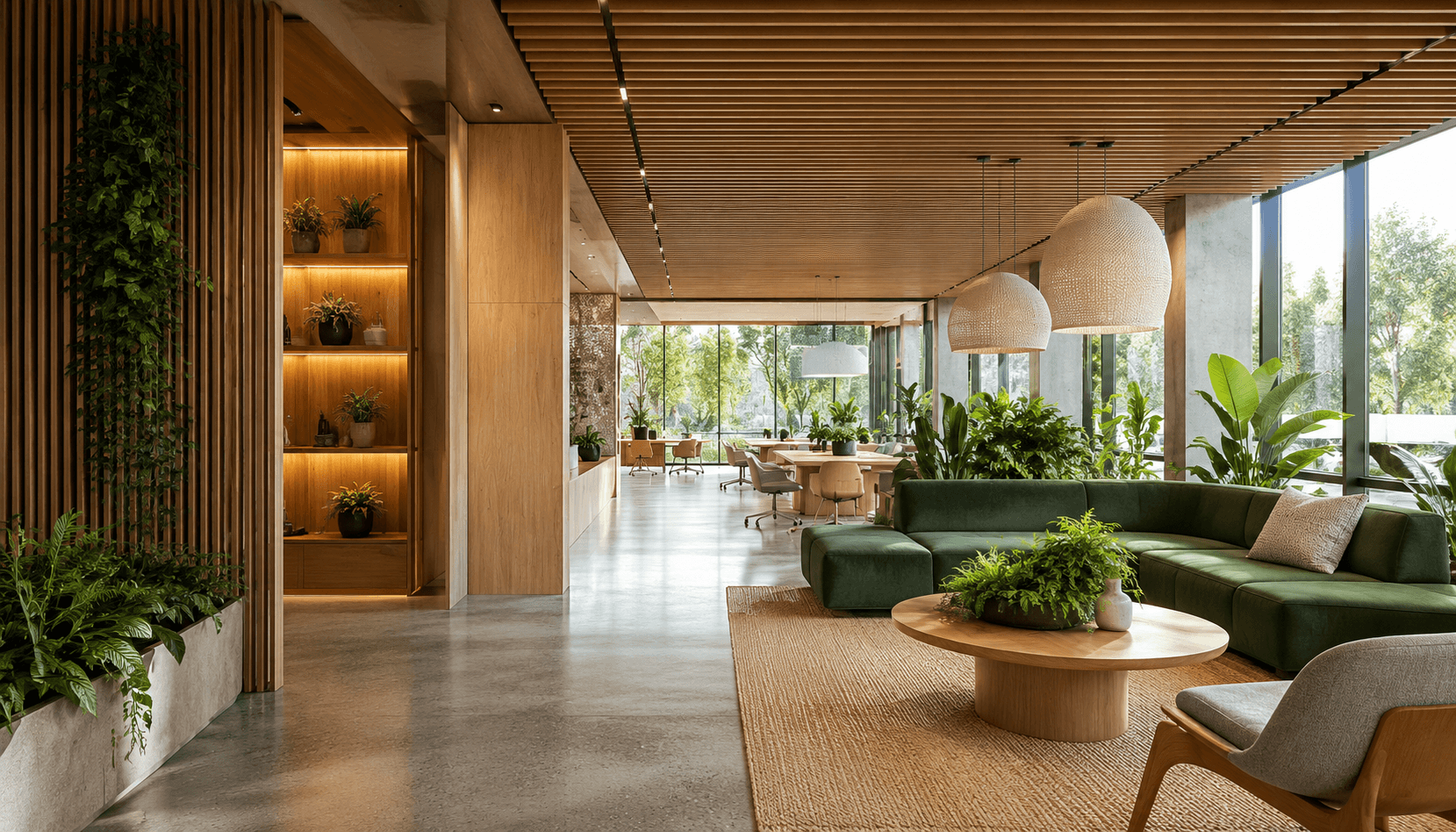
Sustainable Interiors. Intelligent Procurement. Technology-enabled Project Delivery. e-nviroGreen is taking shape today with a clear direction for where the industry needs to go.
ACT I
The Seed Planted
Department of Architecture & Planning, Birla Institute of Technology, Mesra, Ranchi, India, 2008/09
I was in my second year of architecture school when I was introduced to a subject called Climatology. Until then, I had already become fascinated by design - form, function, proportion and space - helped along by Francis D.K. Ching's Architecture: Form, Space, and Order and some wonderful professors who were teaching me how architecture slowly changes the way you look at the world around you.
But climatology introduced me to something different.
We were learning about sun paths, wind, orientation, courtyards, insulation, thermal comfort and the relationship between a building and its climate. Growing up in India, there were examples everywhere of traditional architecture that had responded intelligently to nature long before mechanical systems became the default answer to comfort.
Something about that made complete sense to me.
Architecture was not only about creating something beautiful or functional. There was science behind it. There was nature behind it. And ultimately, there was a person who had to live, work or heal inside whatever we designed.
I started asking myself a fairly basic question: if we design against nature and then spend enormous amounts of energy correcting the consequences, are we really designing well?
I did not know it then, but that question would stay with me for years.
Sustainability did not disappear when the climatology semester ended. I kept bringing it into design assignments, researching how buildings could respond better to their sites and surroundings. By the time I reached my architecture thesis, I knew sustainability would be central to it: “A 75-acre sustainable campus design - Institute of Film & Media Studies.”
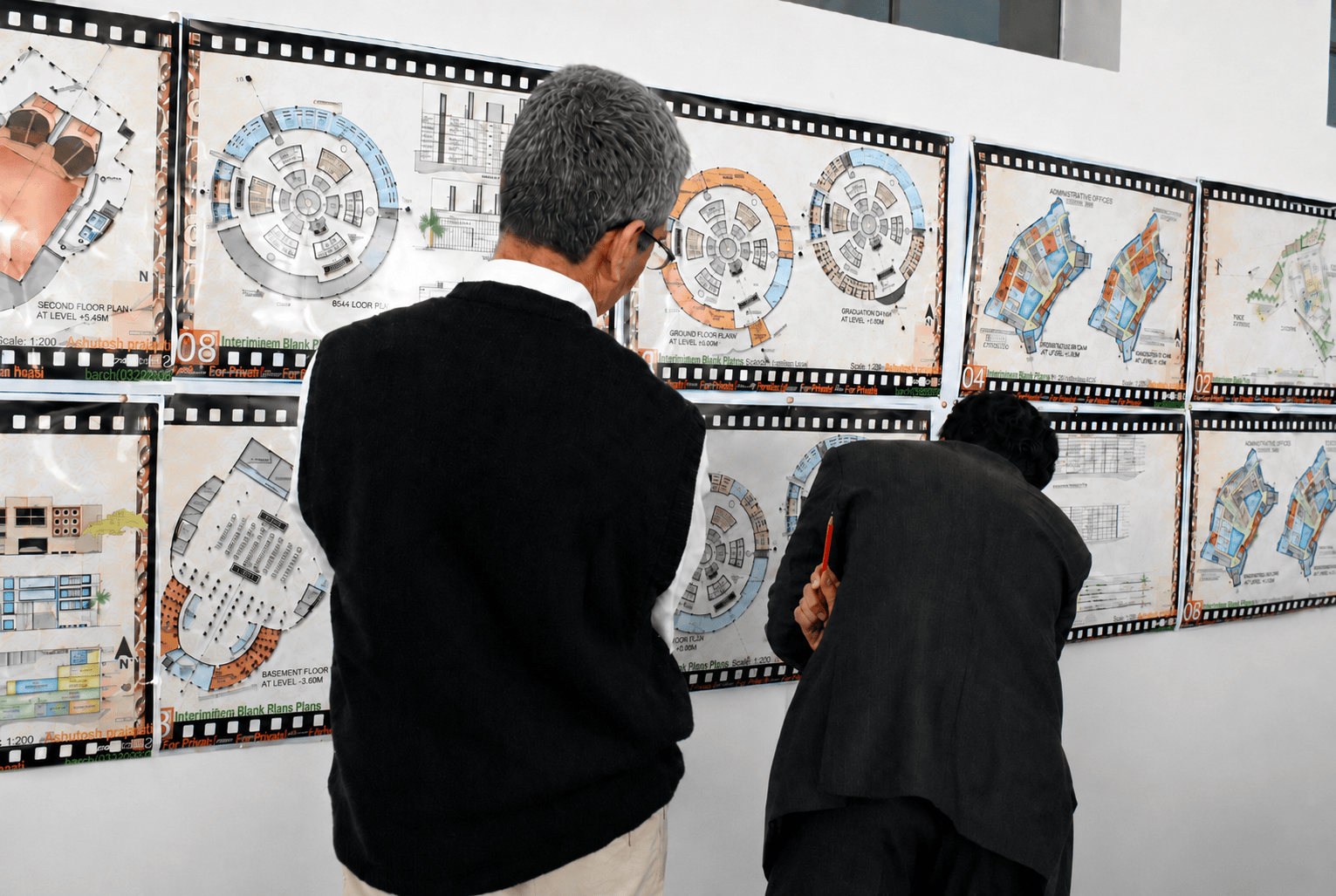
Architecture thesis review — a 75-acre sustainable campus design - Institute of Film & Media Studies..
ACT II
The Seed Nurtured
NICMAR University, Pune, India, 2013
Later, I chose a master's in construction management because I wanted to understand the other side of architecture too - how all the ideas we put on paper actually get implemented and built.
I returned to sustainability again with a thesis on Green Buildings - Evaluation, Analysis and Proposal. I attended the Green Building Congress, completed my IGBC Accredited Professional credential and continued learning about green and energy-efficient building design.
At one of those events, I had the opportunity to have a brief conversation with Dr. Prem C. Jain. I do not remember his exact words after all these years, and I do not want to manufacture a perfect quotation now. What stayed with me was the responsibility of an architect towards both the user and nature - and the idea that responsibility does not end once a building is handed over; the people who use it also become part of maintaining that relationship with nature.
It resonated because I was already beginning to believe the same thing.
At that stage, though, sustainability still lived largely in my head as a design question: How can we design better, aligned with the natural elements - Earth, Water, Fire (heat and light), Air and Space?
ACT III
The Seed Sprouts
Mumbai, India, 2016
I came across an NGO planning a 100-bed charitable hospital near Trimbakeshwar, Maharashtra - approx. 100 miles from Mumbai - intended to improve access to healthcare for tribal and low-income communities in the surrounding region.
I remember thinking, this is it.
This felt like the kind of work architecture should be able to do - work where design could have a purpose beyond simply creating another building. I wanted to bring into it everything I had been learning about climate-responsive, passive and energy-conscious design.
So I left my job, committed myself to the project and incorporated e-nviroGreen Design Services Private Limited.
That was the first e-nviroGreen.
It also taught me something I was not prepared for.
After almost ten months of work, including taking the design through the required statutory approval process, the hospital's funding arrangements eventually changed and the project moved forward with another design team. Around the same period, another major project I was pursuing - a centre for adults with disabilities - could not proceed because of complications around the land.
For a young practice with limited financial resources, losing two important opportunities in a relatively short period was difficult to absorb.
By November 2018, the first e-nviroGreen was effectively over.
Looking back, I do not think the underlying idea was wrong. I think I tried to build it before I was properly equipped to do so.
I understood architecture. I cared deeply about sustainable design. I was willing to work hard.
But a business needs much more than belief and hard work. It needs commercial resilience, diversification, systems, relationships and the ability to survive when something does not go according to plan.
In short, I learned that a business built around sustainability also has to be sustainable in itself. And before I could build one, I needed to become more resilient myself.
Do I regret it? Not at all. Even today, I remember that period as one of the most meaningful chapters of my professional life, simply because of why I was doing it.
ACT IV
Transplanted
Mumbai, India to Toronto, Canada, 2021
The years that followed took me deeper into the AEC sector, interiors, furniture, fit-outs, business development and eventually procurement.
At the time, I was not thinking that I was preparing myself to return to e-nviroGreen. I was simply moving forward professionally. The energy and mission needed channelization.
That period took my learning beyond architecture and construction-management school, into the realities of how projects actually move from design to execution.
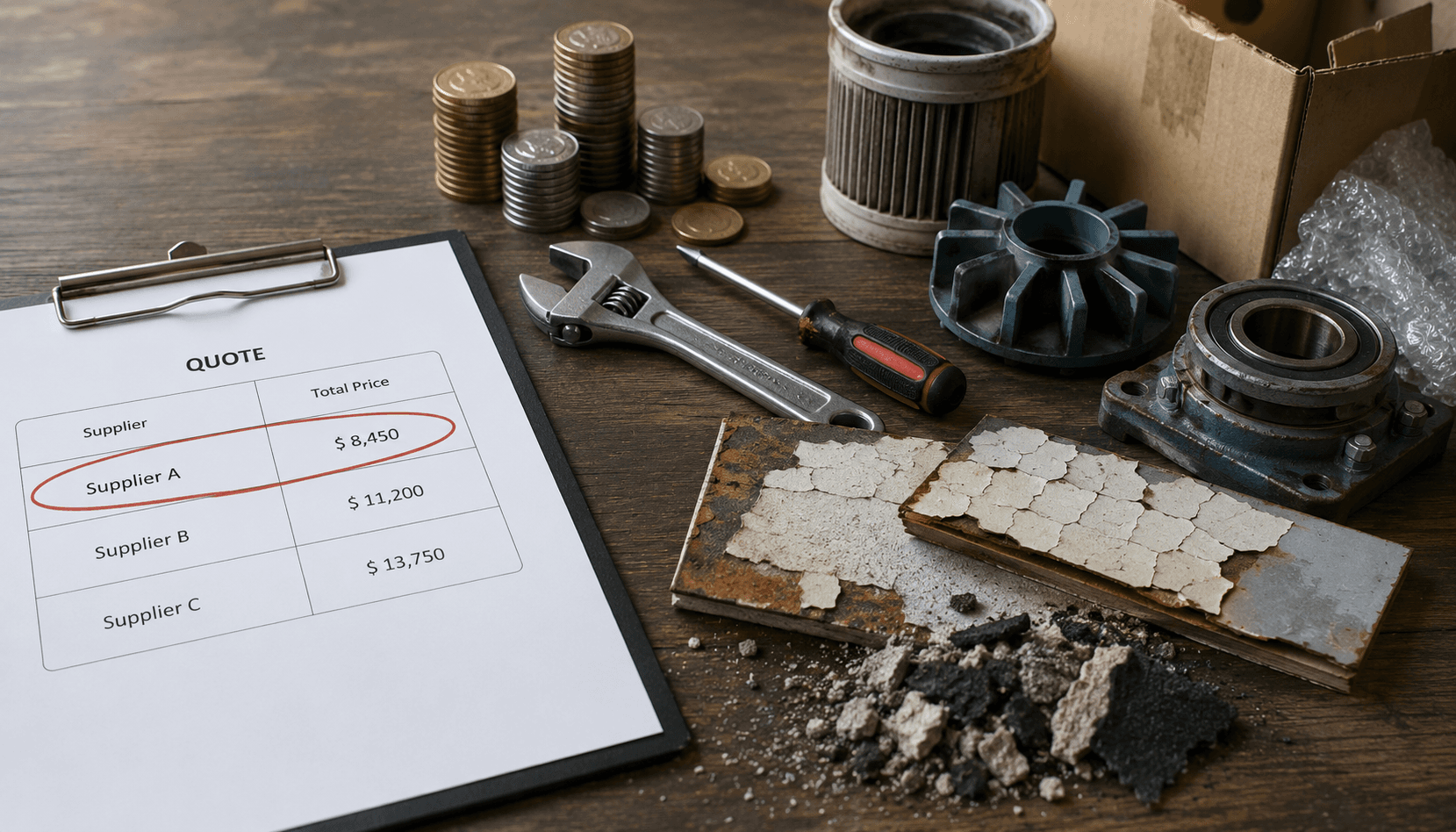
How products are selected. How manufacturers quote. How suppliers operate. How clients make decisions. How specifications change. How something moves from an image on a drawing to a product that must actually be manufactured, purchased, shipped and installed.
That distance between design intent and execution became increasingly important to me.
"When a flower doesn't bloom, you fix the environment in which it grows, not the flower."
- Alexander Den Heijer
During my international business studies at Seneca College, Toronto, one course in particular - Sustainability and Sustainable Development - expanded that thinking considerably. I was exposed more deeply to responsible business, the United Nations Sustainable Development Goals, ESG reporting, equality, materiality and social impact. I was fortunate to learn the subject from a professor whose enthusiasm for it made me look at sustainability far beyond buildings.
Until then, a large part of my thinking had been about sustainable buildings.
Now I was beginning to think about sustainable businesses and sustainable systems.
That distinction matters to me. A building can be energy efficient, but surely sustainability cannot stop at its walls. It is also about how resources are used, how organizations operate, how people are treated, what we consume and what we leave behind.
I have always felt personally connected to nature. Mountains, forests, water — I feel calmer around them. And I have also seen the opposite: enormous landfills, polluted spaces and waste left behind in places that should never have looked that way.
I continued working in the interiors and furnishing industry, built relationships, generated business and learned the North American market from the inside. It was an important chapter for me, and one for which I remain genuinely grateful.
Interestingly, within months of beginning my first job here, I was already proposing an internal sustainability initiative. The timing was not right for the business, which I understood completely.
But looking back, the fact that I was thinking about it again so quickly tells me something.
I had changed countries. My circumstances had changed. My career had changed. The idea had not. If anything, it had grown.
ACT V
New Roots
North America, 2021 - 2024
Over the years, I began noticing another form of waste - one that does not necessarily arrive in a dumpster.
It is the time lost when information is disconnected. The effort spent repeating work. The delays created when design, sourcing, procurement and delivery are not speaking to one another as well as they could.
None of these problems are dramatic on their own. An extra email here. Another revision there. A file that has to be rebuilt. Someone waiting for information that already exists somewhere else. No single stakeholder is necessarily at fault, yet the project can still lose time, money and even parts of its original design intent along the way. And somewhere in that complexity, sustainability goals can easily become another casualty.
Materials are resources. Energy is a resource. But time, money and human effort are resources too.
And if technology can help us use those resources more intelligently, I believe that belongs in the sustainability conversation as well.
The question eventually became bigger than simply asking, “What is this product made from?”
It became: Can the way we design, source and deliver spaces become more responsible too?
Working in furniture and interiors made the material side of that question very practical. Sustainability is still too often presented as something clients must pay extra for, compromise on aesthetically, or accept simply because it is “the right thing to do.”
That is unlikely to take responsible design far enough.
A better choice still has to earn its place through design, performance, cost and practicality. Sustainability should not require clients to choose against those things; the real opportunity is to make them work together.
If something can look good, perform well, make commercial sense and use resources more responsibly, why should it remain the exception?
This is where several parts of the story begin to connect — architecture, interiors, products, procurement and technology.
The first e-nviroGreen had largely grown from an architect’s belief in sustainable design. What was emerging now was something broader: better spaces should not require a choice between responsibility, commercial reality and good design.
ACT VI
Bloom
2025
By this point, e-nviroGreen had started taking shape again.
There had already been a business plan, market research, conversations with potential clients, renewed supplier relationships and a much closer look at what had changed in the industry — particularly what technology was beginning to make possible.
There were also plenty of reasons to wait.
Market uncertainty. Tariffs. Financial considerations. Another skill to acquire. Another lesson to learn. Another supposedly safer moment somewhere ahead.
Eventually, one thing became clear:
There is no perfect day.
The learning never stops. What was different this time was perspective and experience.
Years spent across interiors, furniture, procurement, business development and project delivery had created a much broader understanding of how projects actually move from design intent to execution — where they work well, where they become unnecessarily complicated and where better systems could make a difference.
Just as importantly, the first attempt had taught me something that enthusiasm alone could not: purpose does not replace commercial discipline.
If e-nviroGreen was going to survive long enough to make a difference, the business itself had to be sustainable too.
So eventually the question was no longer whether everything was perfectly aligned.
It was simply:
If not now, then when?
FINAL ACT
Keep Blooming
13th August 2026
The e-nviroGreen taking shape today is not a recreation of the company I attempted years ago.
The original belief remains, but the questions have grown.
Years of working across design, furnishing, procurement and project delivery have brought the business to the intersection of:
Sustainable Interiors. Intelligent Procurement. Technology-enabled Project Delivery.
Sustainability will not be solved by one company, and there are no claims here of having all the answers.
What e-nviroGreen can do is keep asking better questions, find solutions to them, and implement them.
For me, that is the biggest difference between the first e-nviroGreen and the company being built today.
The first began with a belief about sustainable design.
This one carries that belief forward, but with the experience of everything that happened in between.
There is a clear direction for where e-nviroGreen needs to go, and we will keep building towards it. But sustainability has never been a one-company exercise. It takes clients, designers, manufacturers, suppliers, partners and an industry willing to move together.
So yes, we will keep building.
And we will keep blooming - together.
Yours Sustainably,
Ashu