
When Does the Cheapest Option Cost the Most?
The lowest quote only looks cheapest when the comparison ends at purchase. A smarter decision counts how long the product will last, what it will cost to maintain, and what happens when it fails.
Most interior purchases are still compared on a single number: the amount at the bottom of the quote. It is fast, familiar and easy to defend in a budget meeting.
But that number tells you what a product costs to buy—not what it costs to live with.
A chair that loosens after a year, a finish that cannot be repaired or a light fitting with difficult-to-source parts may all look economical on day one. The real expense appears later, through repairs, replacements, downtime, rushed reorders and waste.

Years of use, not purchase day
The Problem Is Not the Low Price
There is nothing wrong with choosing the least expensive option when it genuinely meets the project’s needs. The problem begins when price is treated as proof of value.
Two products can look almost identical on a schedule while performing very differently in use. One may have replaceable components, a stronger warranty and local service support. The other may be cheaper because those things are missing.
When the comparison stops at unit price, the weaker product is given an advantage before the project team has even asked the questions that matter.
Why the Cheap Choice Becomes Expensive
This usually happens because design, procurement and operations are looking at different parts of the decision.
- The design team checks appearance, dimensions and finish.
- Procurement is asked to reduce the order value.
- Operations inherits the cleaning, repair and replacement burden.
- The supplier is rarely asked to prove service life, parts availability or take-back options.
No one is making a reckless decision. The process is simply too narrow. Costs that do not sit on the purchase order are pushed into someone else’s budget—or into a later year.
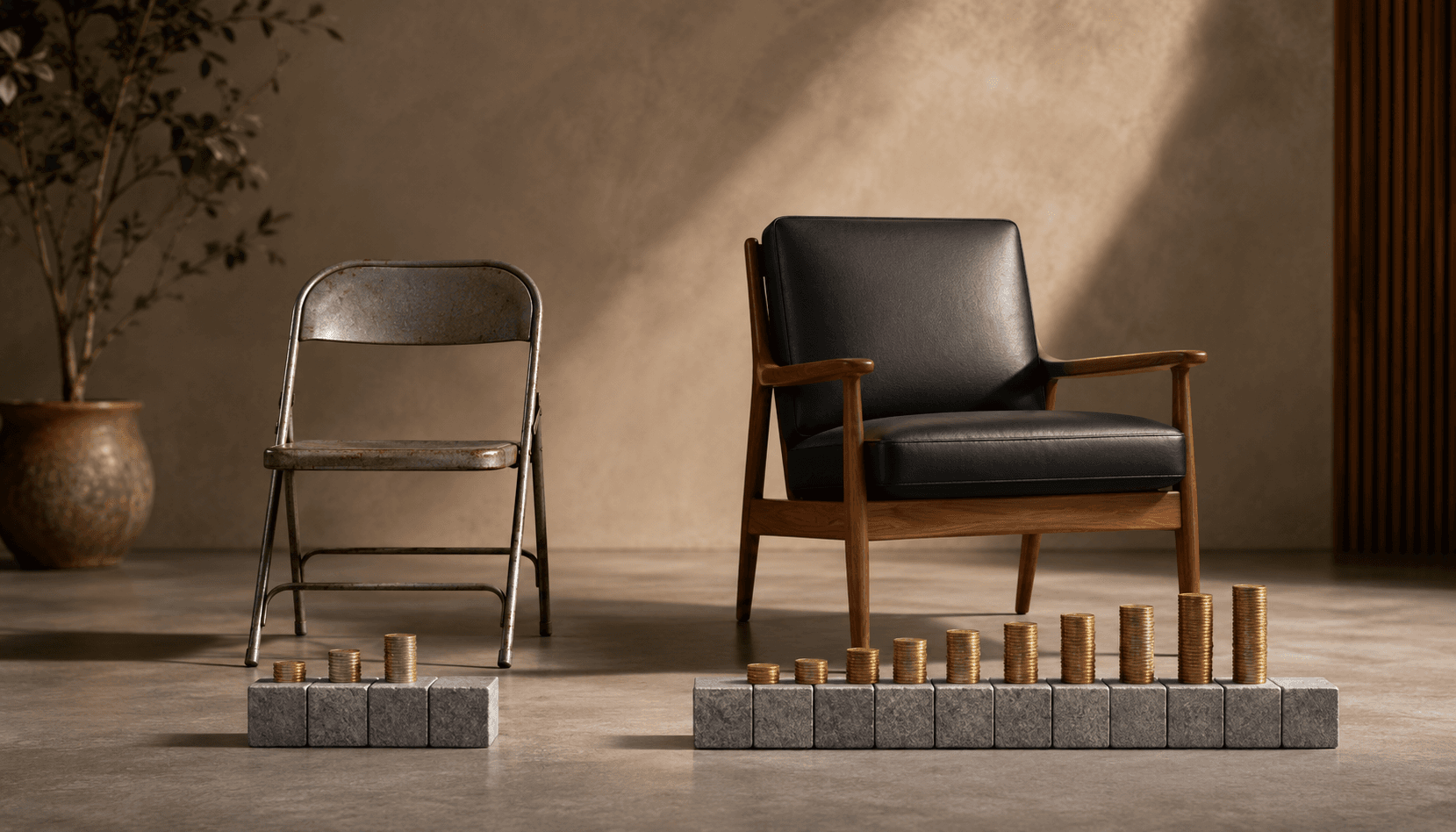
Failure, repair and disruption
A Fair Comparison Uses Cost per Useful Year
A better comparison starts with one practical question: how long do we realistically expect this product to perform in this setting?
Then use the same boundary for every option: purchase, installation, routine maintenance, likely repairs, replacement, disruption and end-of-life value.
“SIMPLE COMPARISON METHOD: Cost per year of useful life = (purchase + installation + maintenance + repairs + replacement or disposal − residual value) ÷ expected years in service”
Here is a simple illustration. A $350 chair that lasts three years costs about $117 per year before repairs or disposal. A $600 chair that performs for eight years costs $75 per year. The more expensive chair is not automatically better—but the lower purchase price is no longer enough to settle the decision.
Life-cycle cost guidance from NIST, the U.S. Department of Energy and RICS uses this same principle: compare alternatives across an agreed period and include the costs that arise after acquisition. For furniture, BIFMA’s LEVEL program also helps buyers look beyond a marketing claim by checking products against third-party sustainability criteria.
What to Ask Before Approving the Lowest Bid
- What service life is realistic for this product in our actual use environment?
- What does the warranty cover—and what does it exclude?
- Can high-wear parts, upholstery, drivers, controls or hardware be replaced?
- Are maintenance instructions, spare parts and local service available?
- What happens if the product is discontinued?
- Can it be refreshed, reused, taken back or recycled at the end of use?
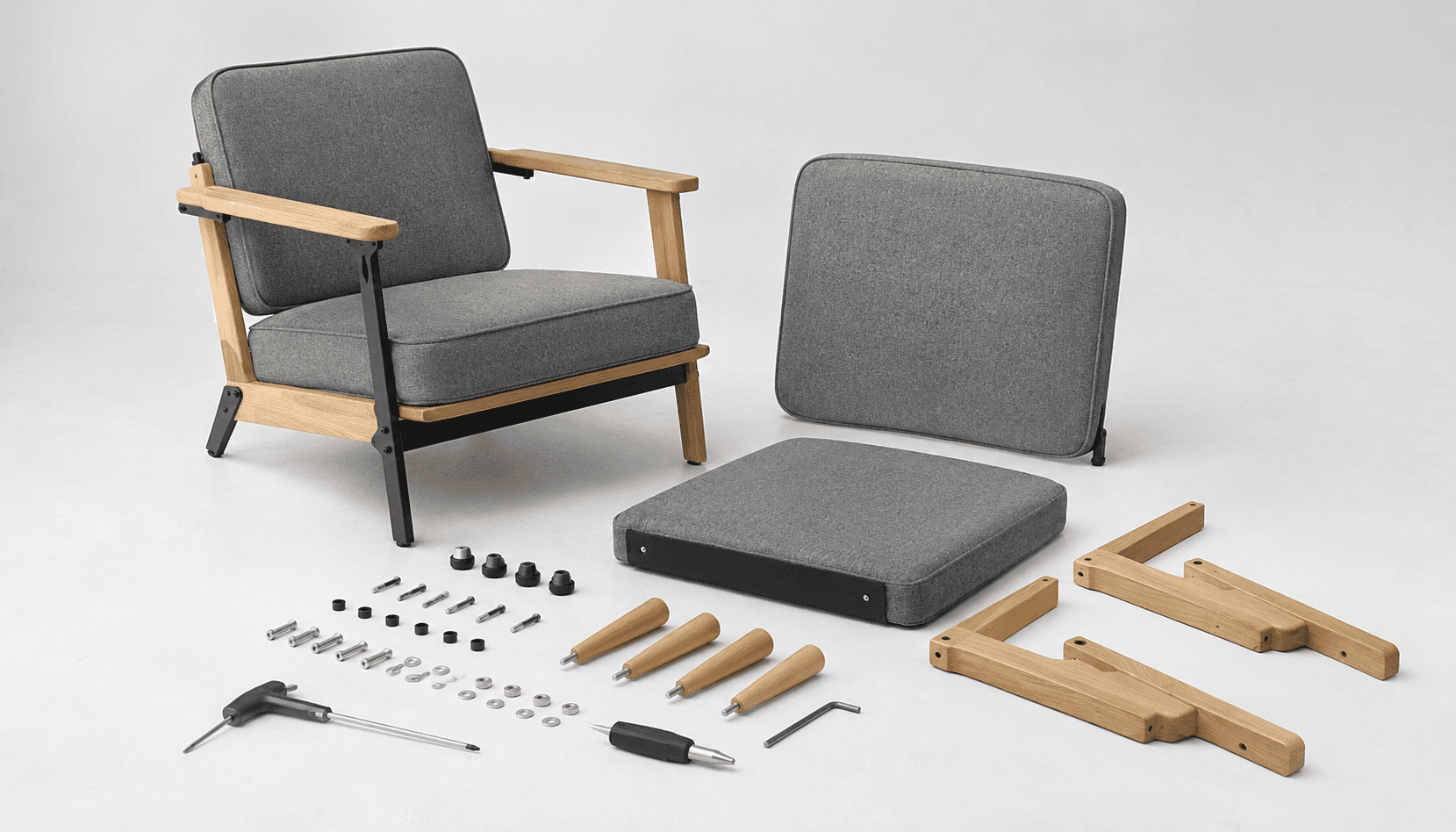
Evidence before approval
Ask for the answers in writing. “Commercial grade,” “durable” and “sustainable” are not performance data. A credible supplier should be able to explain what the product is designed to withstand and how it will be supported.
Where This Bites Hardest
The value gap becomes most visible in spaces with heavy use or frequent change: hospitality seating, multifamily common areas, student housing, workplaces, clinics and public-facing spaces.
In those settings, a premature replacement is not only the cost of buying again. It can mean room downtime, labour, freight, storage, installation, guest or resident disruption, and the disposal of a product that never delivered its expected life.
EPA’s sustainable materials guidance encourages looking at the full material life cycle—use, maintenance, reuse and end of life—because longer use and productive reuse can reduce both environmental impact and cost.
What Changes When You Buy for Value
A whole-life comparison does not mean choosing the premium option every time. It shows where extra quality has a job to do—and where a simple, lower-cost product is perfectly adequate.
The result is usually a more disciplined budget: fewer emergency replacements, more predictable maintenance, less waste, better supplier accountability and fewer compromises after opening day.
It also improves value engineering. Instead of cutting the features that protect service life, the team can simplify elements that do not affect durability, repairability or performance.

Durability and adaptability
Where to Start
For your next comparison, add four columns beside unit price: expected service life, maintenance and repair, replacement disruption, and end-of-life route. Even approximate answers will expose where the quote is carrying hidden risk.
The cheapest option costs the most when saving money today creates a larger, less visible bill tomorrow.
Good procurement is not about spending more. It is about knowing where spending less will actually cost you.
“PRACTICAL TAKEAWAY The lowest quote is only a saving when the product still performs, can be supported and does not force the project to buy the same thing twice.”
At a glance
- 1
Discover why price should not be treated as the sole proof of value.
- 2
Understand how design, procurement and operations affect total cost differently.
- 3
Learn to use a cost-per-useful-year method to make fairer purchasing comparisons.
Sources & further reading
Stay Inspired.
Stay Informed.
We respect your privacy. Unsubscribe anytime.