What If Sustainability Is the Smarter Business Decision?
Sustainability is often presented as the responsible choice. But for owners, developers and operators, there is a more useful question: is it also the smarter business choice?
Most project budgets begin with a simple number: what will this cost today? That is understandable. The problem is that many of the costs created by an interior do not arrive on day one. They show up later as energy bills, maintenance, early replacement, downtime, complaints, waste and a space that no longer suits the business.
That is where sustainability becomes practical. At its best, it helps a project look beyond the purchase order and ask a better question: which option will perform well for the people using the space, the team operating it and the owner paying for it over time?
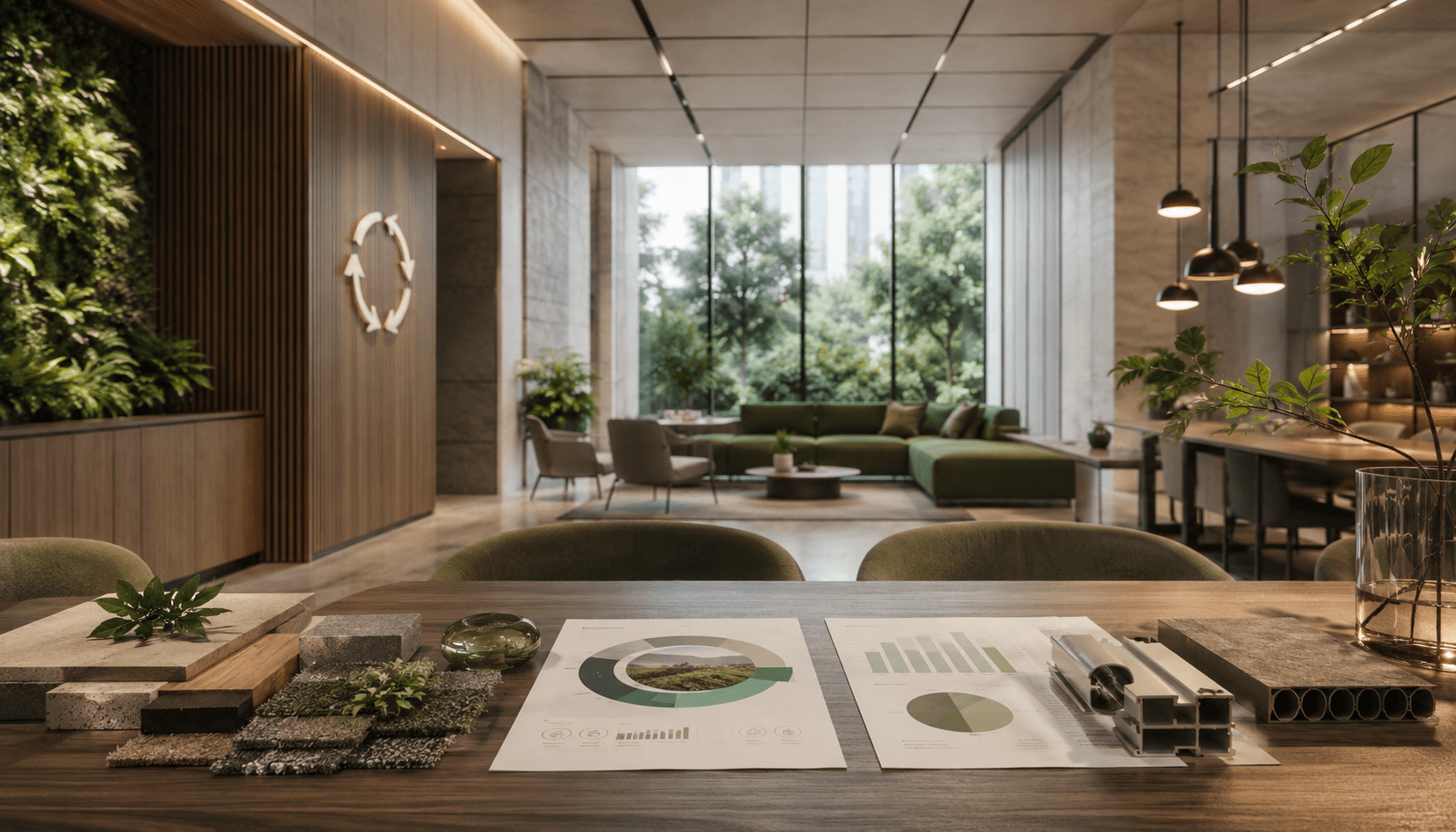
Sustainability creates business value when design, procurement and operations make the decision together.
The real problem is not sustainability. It is short-term decision-making.
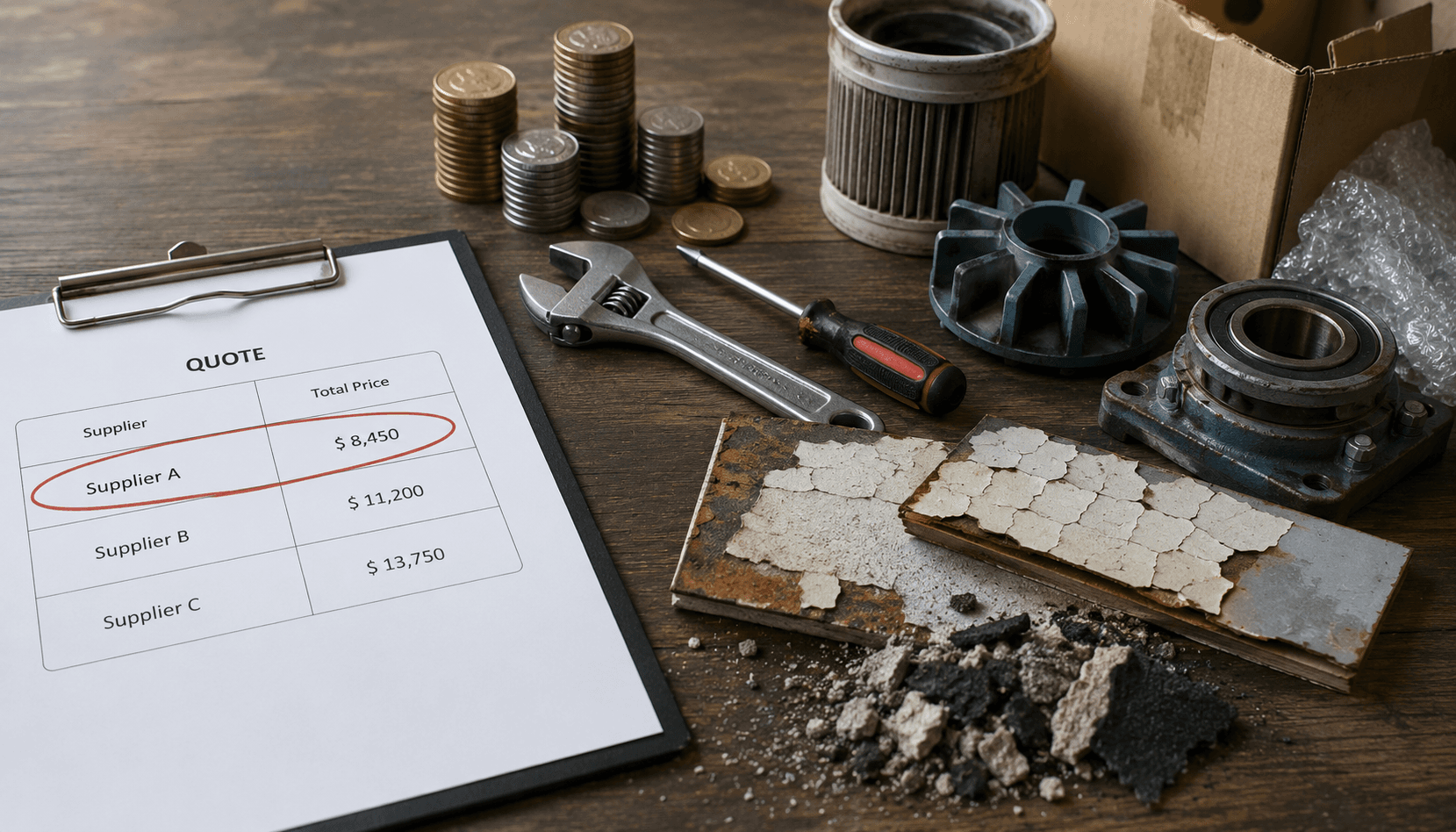
A product can look economical because its purchase price is low. But what happens if it uses more energy, is difficult to clean, cannot be repaired, needs replacing early or comes with weak supplier support? The cheaper choice may still be right—but only after those consequences have been considered.
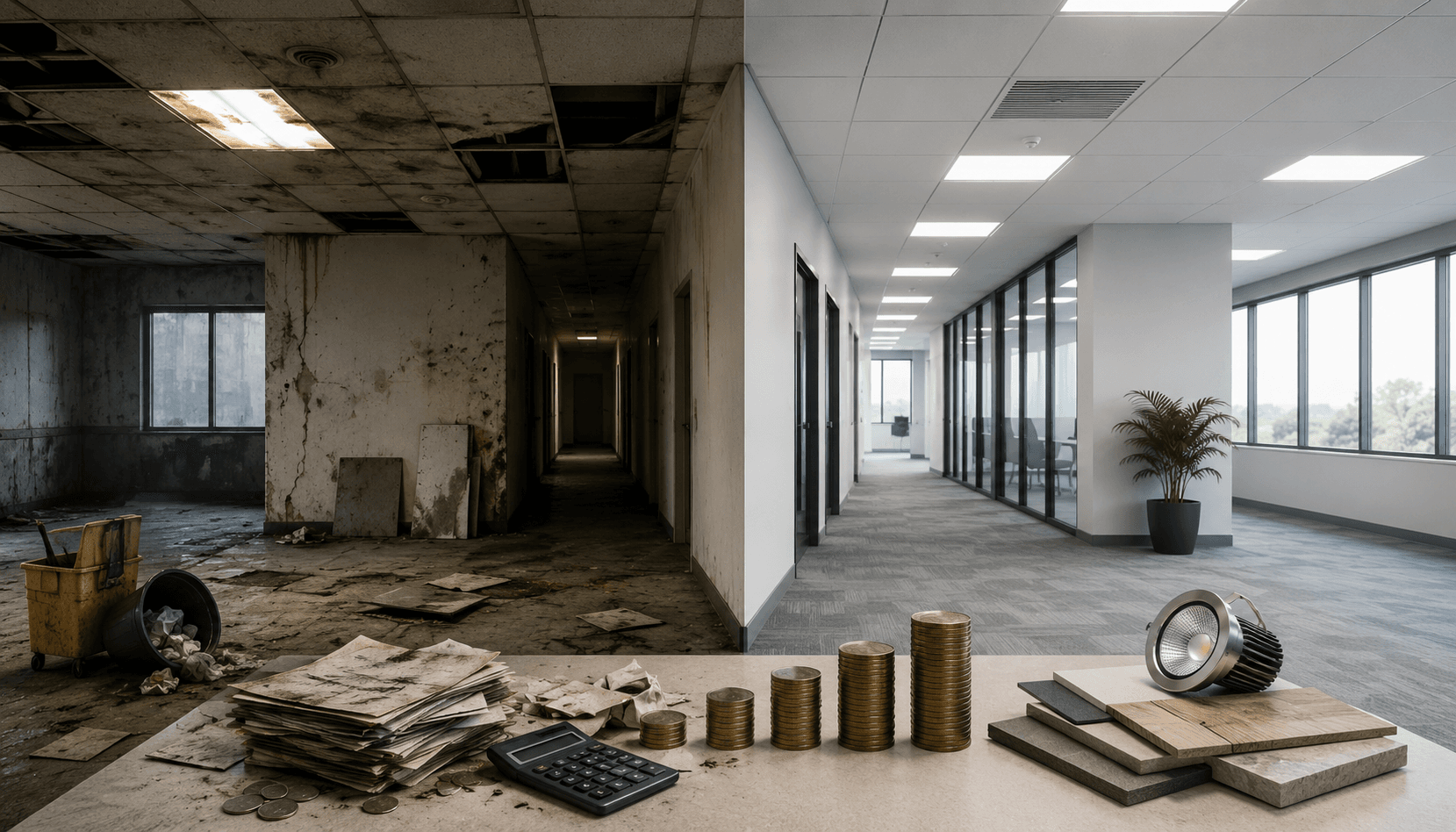
The purchase price is visible immediately. The cost of early replacement and disruption arrives later.
The U.S. Department of Energy uses life-cycle cost analysis for exactly this reason: it compares the costs of buying, operating, maintaining and eventually disposing of an option. That wider view can show when a higher initial investment is actually the more economical choice over the life of a project.[1]
Why do projects keep missing this?
Usually, nobody is trying to make a bad decision. The issue is how the work is structured:
- Design focuses on appearance, function and deadlines.
- Procurement is pushed to secure the lowest acceptable price.
- Operations joins too late to challenge maintenance or performance assumptions.
- Sustainability claims are accepted without enough product evidence.
- Success is declared at handover, before anyone checks how the space performs.
Each team may be doing its job. The problem is that the project is not judging the whole result.
What does a smarter approach look like?
It does not mean buying the most expensive product or adding "green" features everywhere. It means making a few decisions earlier and with a wider lens.
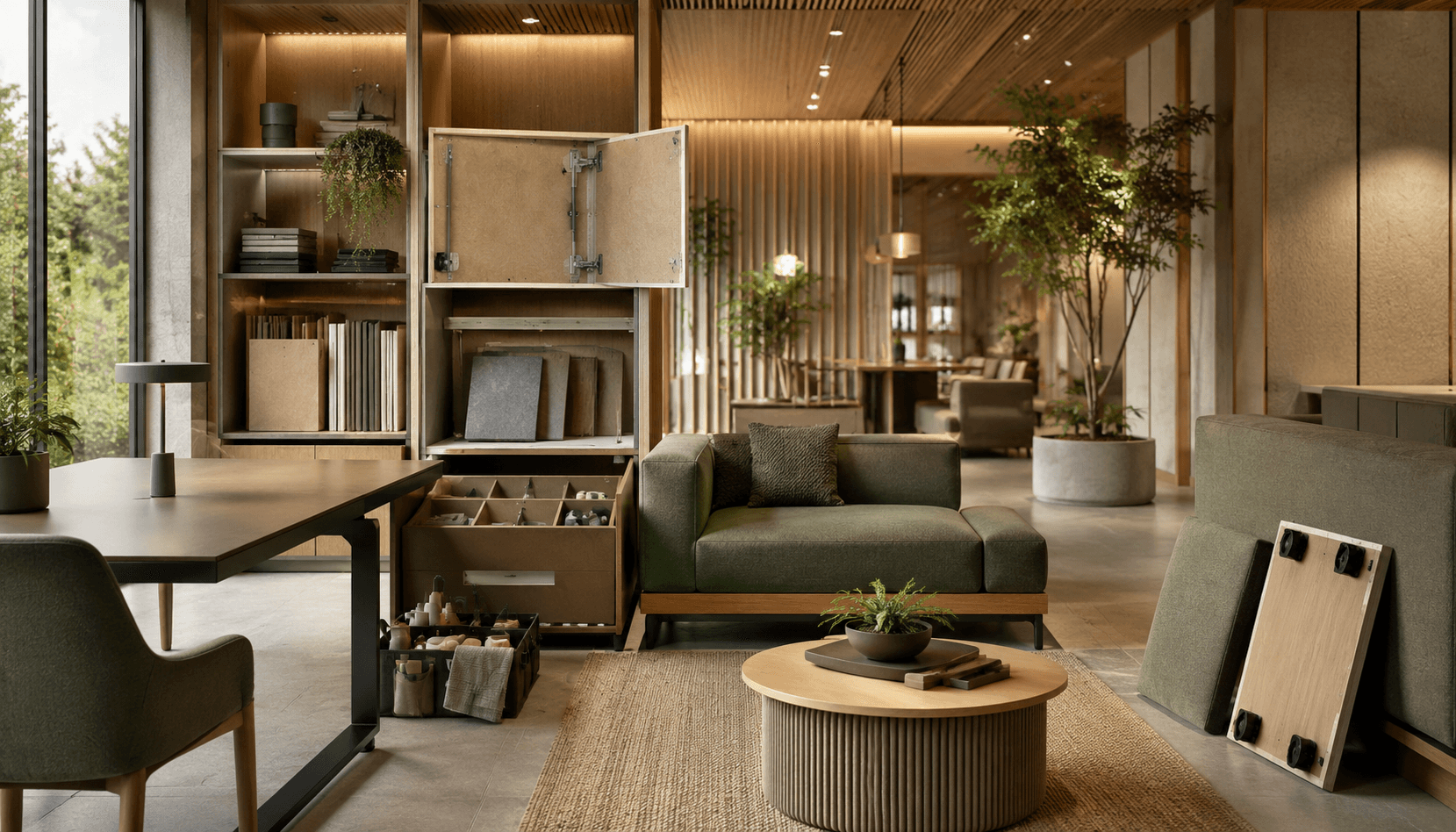
Better decisions come from comparing evidence, service life, maintenance and supplier capability—not labels alone.
Conventional decision
• Judge the option by purchase price • Choose products after the design is fixed • Accept broad sustainability claims • Declare success at handover
Smarter decision
• Compare total cost over the period you expect to own or use it • Bring design, procurement and operations into the conversation early • Ask for useful evidence: emissions, durability, repairability, warranty and end-of-life options • Check energy, defects, maintenance, waste and user feedback after occupation
There is good evidence that performance-led buildings can cost less to run. In a two-year review of more than 600 U.S. federal buildings, the General Services Administration found that its high-performance buildings used 21% less energy and 29% less water than its legacy stock, while also saving an average of $0.60 per rentable square foot in annual operating expenses.[2]
“A sustainable choice is not automatically a smart choice. It becomes smart when the evidence, the lifecycle and the people using the space all support it.”
Those figures should not be copied into every interior-project business case. Different buildings, climates and operating models produce different results. But the lesson is useful: when projects define performance, track it and keep improving it, better outcomes can be measured—not merely claimed.
Materials matter, too—but labels are not enough.
Paints, adhesives, furniture and other interior products can release volatile organic compounds into indoor air. The U.S. Environmental Protection Agency notes that building materials and furnishings are among the sources of VOCs, and that some common organic pollutants have been measured at higher concentrations indoors than outdoors.[3]
That does not mean every "low-VOC" label guarantees a healthy space. It means product selection should look at credible emissions information, installation requirements, ventilation and how the material will actually be used.
What changes when you get it right?
The impact is broader than a smaller environmental footprint. A well-planned sustainable interior can help an organization:
- reduce avoidable energy, maintenance and replacement costs;
- choose materials that are healthier, more durable and easier to manage;
- reduce waste by reusing what still works and planning for repair or recovery;
- create spaces that support comfort, wellbeing and day-to-day performance;
- protect the asset from changing expectations, regulations and operating costs.
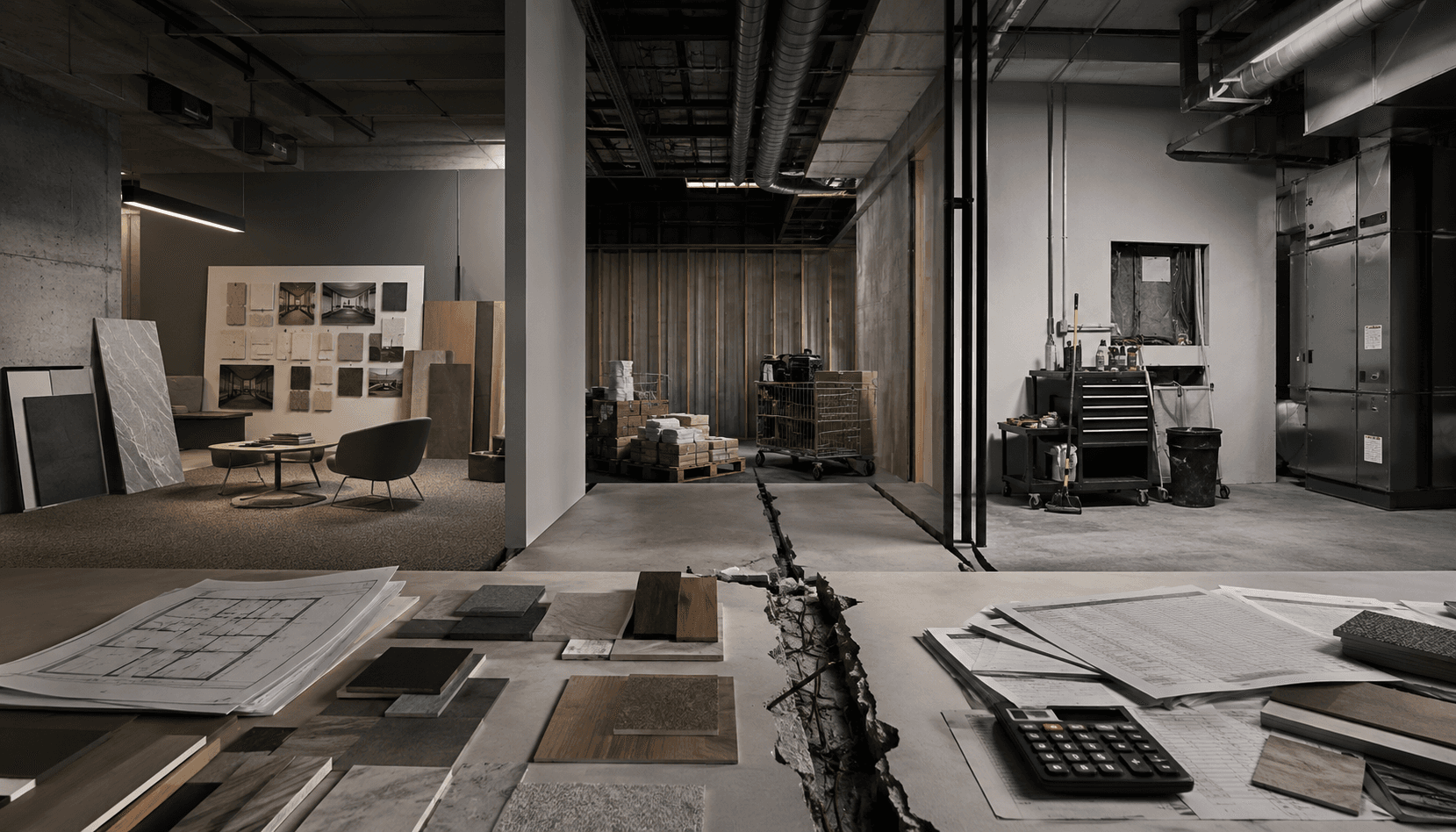
A high-performing interior should work for the people using it and the team operating it every day.
Five questions to take into your next project meeting
- 1. What will this choice cost to own, operate, maintain and replace—not only to buy?
- 2. What evidence supports the product’s durability, emissions and environmental claims?
- 3. Can we reuse, repair or adapt something instead of replacing it?
- 4. Has the operations team reviewed the decision before it is locked in?
- 5. What will we measure after handover to know whether the choice worked?
Sustainability becomes far more valuable when it stops sitting beside the business case and starts improving it. The goal is not to make every project look "greener." It is to make better decisions—ones that hold up financially, operationally and environmentally long after the space opens.
At a glance
- 1
Understand why the lowest upfront price may not be the lowest long-term cost.
- 2
See how design, procurement and operations become stronger when decisions are integrated.
- 3
Learn how evidence, lifecycle value and performance change the business case.
Sources & further reading
Stay Inspired.
Stay Informed.
We respect your privacy. Unsubscribe anytime.