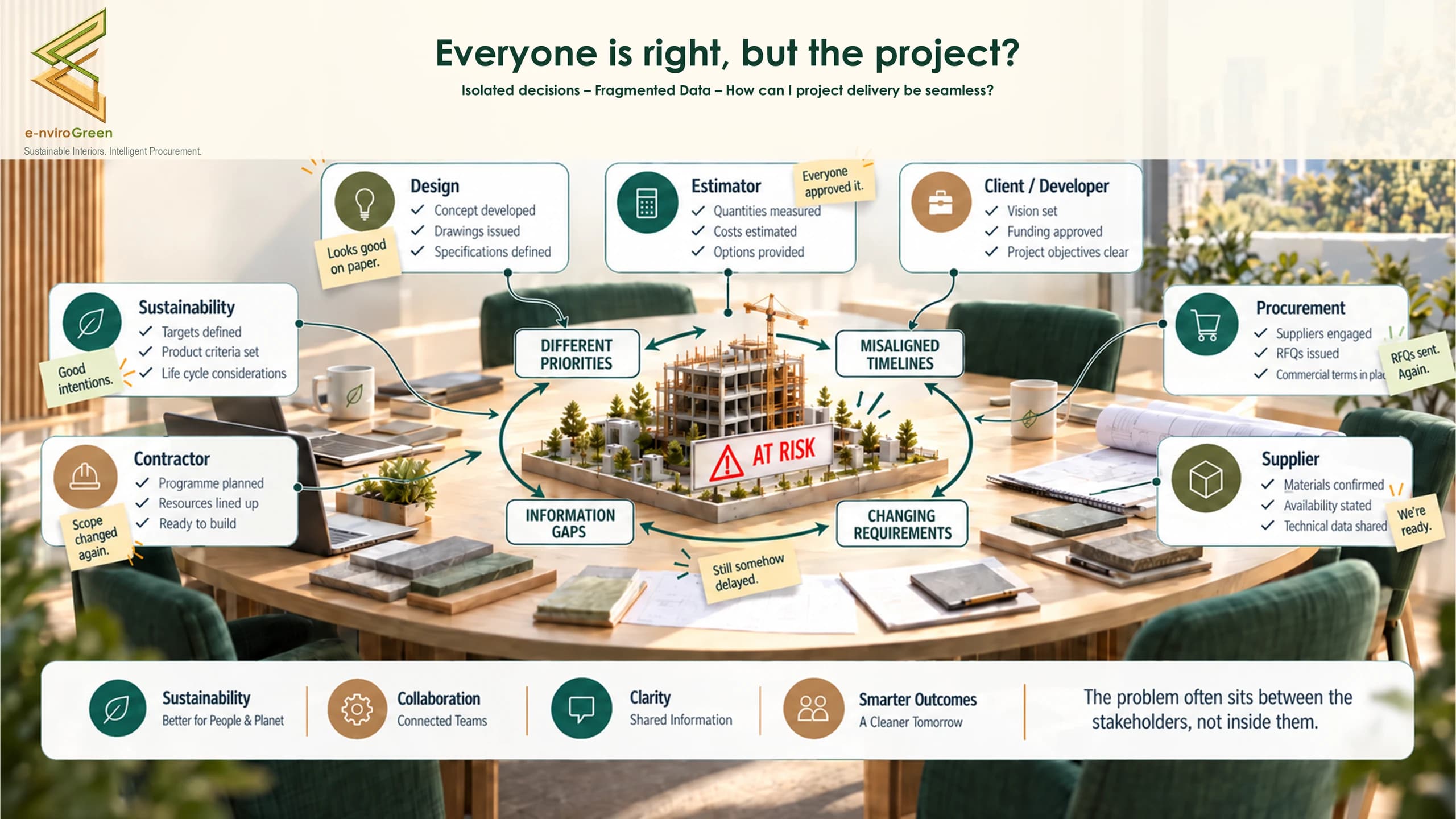
The Handoff Gap Between Designer, Specifier, Buyer and Installer — Where Does the Ball Drop?
Learn where design intent is lost between specification, procurement and installation—and how one controlled approval process protects performance, cost and sustainability.
Most project teams do not set out to dilute the design. The designer is trying to protect the concept. The buyer is trying to hold the budget. The supplier is trying to meet the programme. The installer is trying to make the site work. Yet by the time the final chair, finish, light or millwork package is installed, it may no longer match what was originally approved.
A cross-disciplinary project team reviews plans, samples and procurement information together.
The problem is rarely one dramatic mistake. It is usually a chain of small decisions made by different people, in different systems, with only part of the context.
The Real Problem Is Not the People
Interior projects move through several hands: design, specification, tendering, value engineering, procurement, logistics and installation. Each handoff creates a chance for information to be shortened, reinterpreted or lost.
A product may be substituted because the specified item is unavailable. A finish may change to protect the budget. A buyer may approve an alternative based on price and lead time, without seeing the performance criteria behind the original choice. An installer may receive a delivery schedule but not the design rationale or approved sample.
Everyone may have acted reasonably. The outcome can still be wrong.
Where the Ball Usually Drops
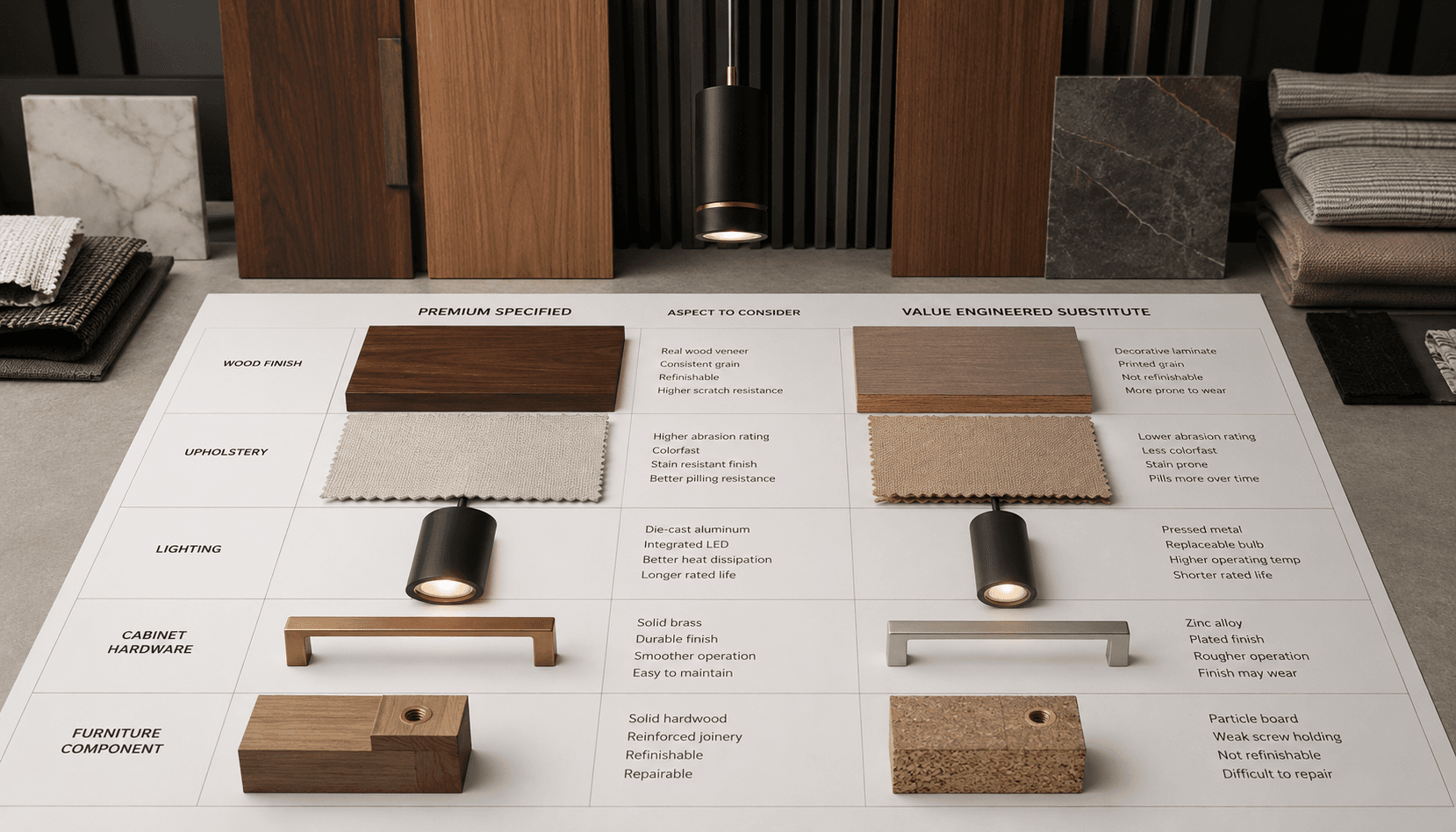
The first weak point is value engineering. Used well, it protects function while improving value. Used poorly, it becomes a quick cost-cutting exercise. A lower price is accepted, but durability, repairability, emissions, warranty, appearance or maintenance may not be compared properly.

An installer checks a delivered product against the approved design documents and physical sample.
The second weak point is substitution. “Similar” is not the same as equivalent. Two products may look alike and perform very differently under heavy use, cleaning chemicals, moisture, sunlight or repeated repair.
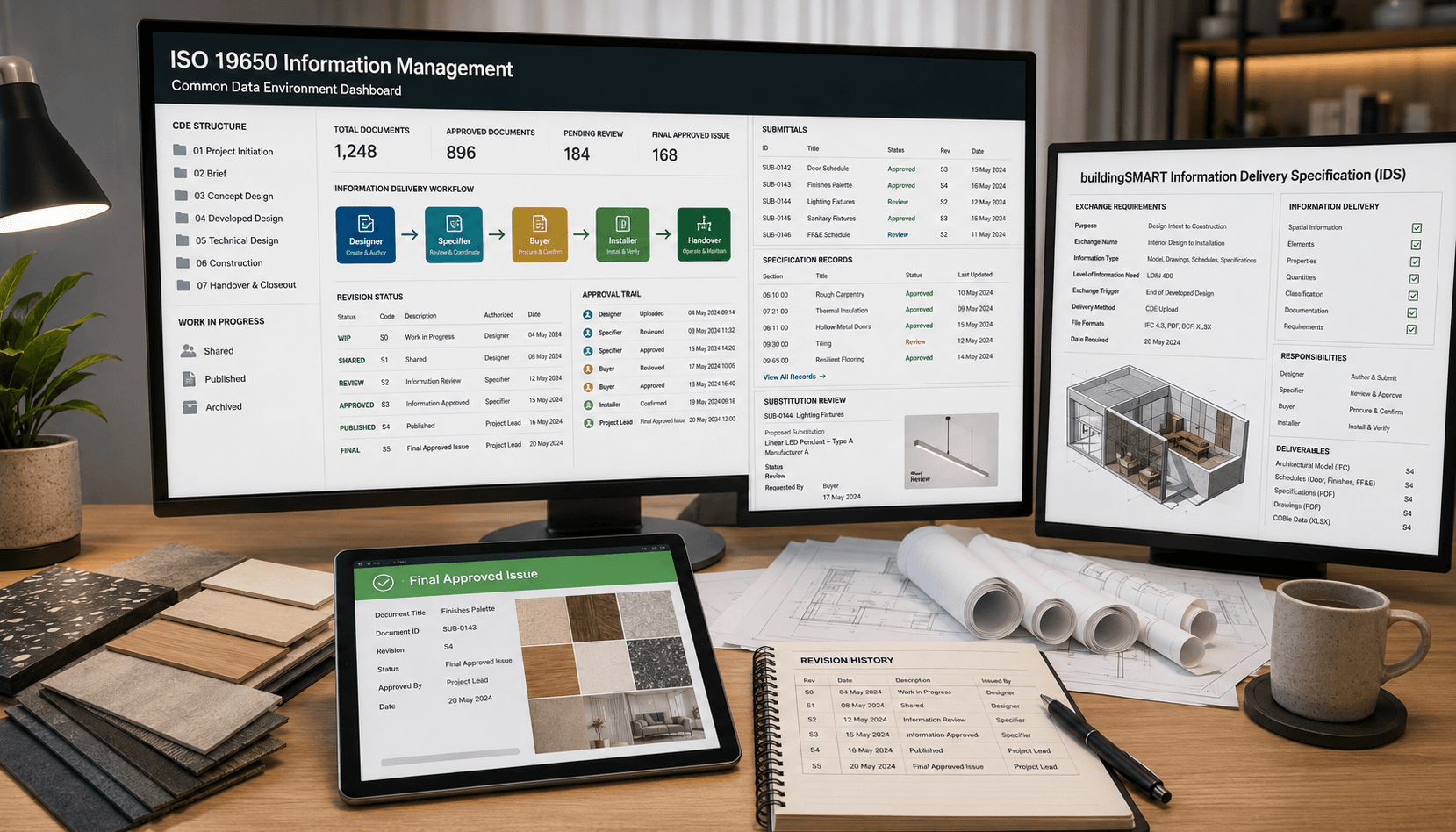
The third weak point is document control. The design team may update the specification, the buyer may work from a spreadsheet, the supplier may quote against an older revision and the installer may receive a separate delivery list. Once several unofficial versions exist, nobody is completely sure which decision is current.
The final weak point is site execution. Late substitutions are sometimes made to solve real installation or schedule problems. But when they happen without a visible approval trail, the project quietly trades away the original intent.
Why “Approved” Does Not Always Mean Equivalent
A proper substitution review should answer more than “Does it fit?” and “Can it arrive?”
- What requirement did the original product satisfy?
- Which attributes are non-negotiable?
- What has changed in cost, lead time, warranty and maintenance?
- Does the alternative meet the same durability, material-health and sustainability expectations?
- Who has authority to accept the difference?
- Has the approved decision reached the installer?
Build a Chain of Custody for Every Important Decision
A stronger workflow does not require everyone to use the same software. It requires one controlled record that everyone can trust.
- 1. Record the intent, not only the product name. State why the item was selected: performance, visual role, environmental criteria, compatibility, warranty and service expectations.
- 2. Define the non-negotiables. Separate “must match” requirements from preferences. This gives procurement room to find alternatives without guessing what can safely change.
- 3. Use one live specification record. Drawings, schedules, approvals, samples and substitution decisions should point back to the same current record.
- 4. Make substitutions evidence-based. Require a side-by-side comparison and supporting documents. A supplier statement alone should not close the review.
- 5. Show the impact before approval. Every change should make its effect on cost, programme, appearance, performance, maintenance and sustainability visible.
- 6. Carry the approval to site. The installer should receive the approved item, revision, sample and installation requirement—not simply a purchase order line.
Designer, buyer, supplier and installer complete an evidence-based substitution review.
What Changes When the Handoff Works
The benefit is not just fewer design disputes. A connected handoff gives the buyer clearer authority, the supplier cleaner requirements, the installer fewer surprises and the owner a more reliable asset record.
It also makes cost control more honest. Instead of discovering the consequences after installation, the team can decide knowingly: save money here, accept a longer lead time there, or protect a requirement because the future operating cost is greater than the short-term saving.

A completed premium interior whose materials, furniture and installation visibly align with the approved design intent.
Five Questions to Ask Before the Next Package Is Released
- Is there one current specification that every stakeholder can access?
- Are the reasons behind important product choices recorded?
- Do substitution requests compare performance, not just price and appearance?
- Is one named person accountable for approving each change?
- Can the installer see the final approval and the evidence behind it?
The Ball Does Not Have to Drop
The ball does not have to drop. Most handoff failures are preventable when the project treats information as part of the deliverable—not as paperwork that follows behind it.
A sustainable concept and a sustainable completed project are not the same thing. The difference is a clear chain of responsibility, evidence and decisions from the first specification to final installation.
At a glance
- 1
Why design intent gets lost
- 2
How to avoid handoff gaps
- 3
Why 'approved' doesn't always mean equivalent
Sources & further reading
- ISO 19650-1:2018 — Information management using BIM: Concepts and principles
- ISO 19650-2:2018 — Information management using BIM: Delivery phase
- buildingSMART International — Information Delivery Specification (IDS)
- RICS — Change Control and Management, 1st edition
- RICS — Value Management and Value Engineering, 1st edition
Stay Inspired.
Stay Informed.
We respect your privacy. Unsubscribe anytime.