
The Hotel Refresh-Cycle Problem: How Hospitality Can Reduce Waste Without Losing Luxury
Hotel refreshes do not have to mean full replacement. Learn how asset audits, repairable FF&E and smarter procurement can reduce waste while protecting the guest experience.
A hotel can feel renewed without sending every chair, headboard and finish to landfill. The smarter refresh keeps what still works, upgrades what guests actually notice, and plans the next cycle before this one begins.

The Hotel Refresh-Cycle Problem
The Problem Is the Default to Replacement
Hotels are expected to look current. Guests notice worn upholstery, dated lighting, tired finishes and anything that makes a room feel neglected. Refresh cycles are not the problem. They protect the brand and the guest experience.
The problem begins when ‘refresh’ automatically means ‘replace everything.’ A chair with a solid frame may only need new fabric. A headboard may need a new panel, not a new carcass. A lobby can feel completely different through lighting, art, layout and selective refinishing. Yet many projects still start with a new FF&E schedule before anyone has properly assessed what is already there.
Once replacement becomes the default, the costs spread beyond the purchase order. The hotel pays to remove, store and dispose of existing items. It pays again for production, packaging, freight and installation. Late decisions can also bring rush shipping, temporary storage and longer room downtime.
The environmental cost follows the same pattern. Usable furniture, fixtures, textiles and finishes leave the property while new materials are manufactured to take their place. The U.S. Environmental Protection Agency recommends source reduction, salvage and reuse before disposal because keeping useful materials in circulation can avoid waste and the impact of producing replacements.
Why the Cycle Keeps Repeating
This is rarely caused by a lack of good intentions. It is usually the brief.
Brand standards may describe an exact look without identifying what can be retained. Procurement may ask about price and lead time, but not spare parts, repair support or take-back options. Design decisions may exclude maintenance and housekeeping teams, even though they know which seams split, finishes stain and hardware fails first.
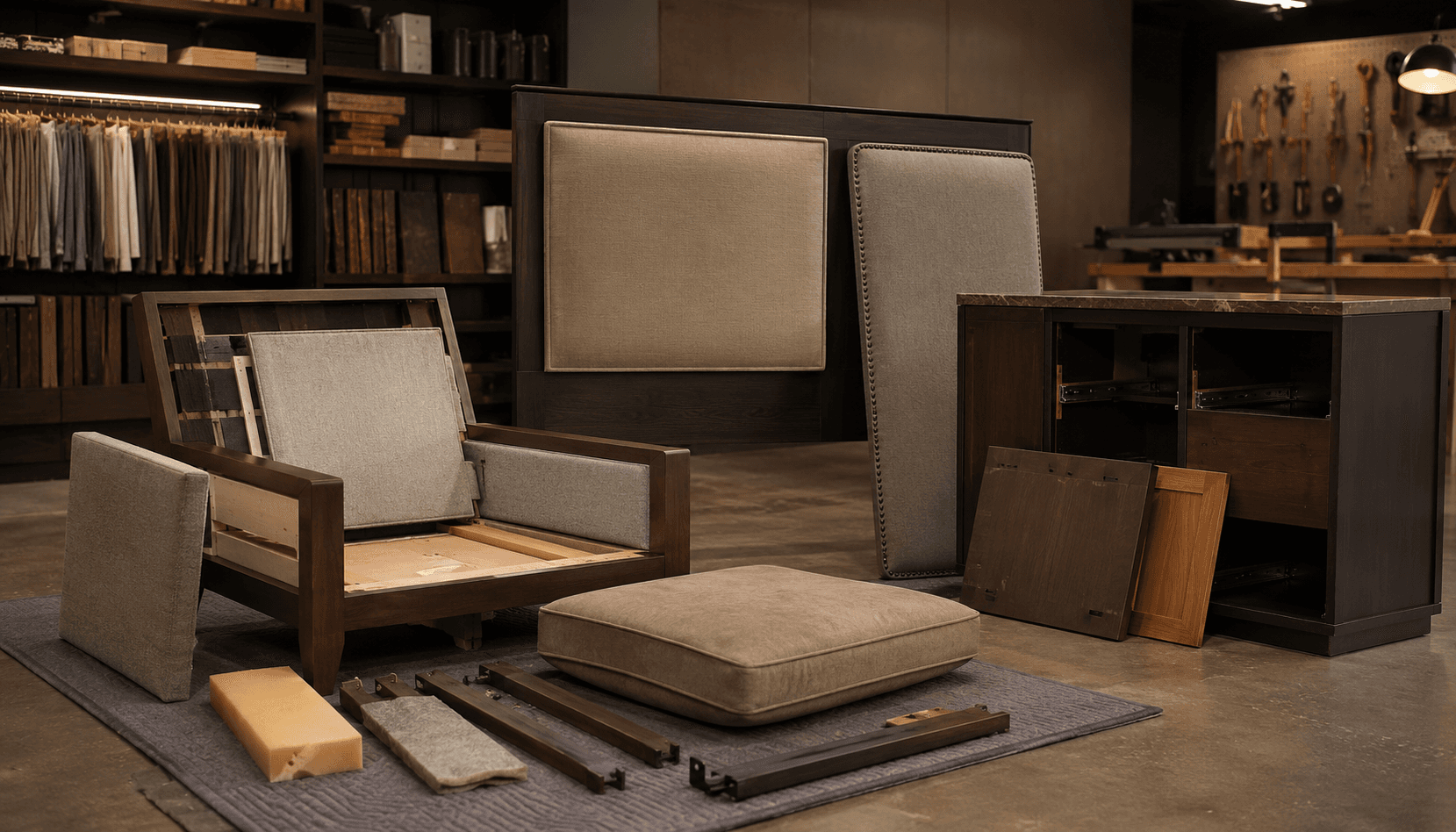
The existing-asset audit before new selections begin.
Different parts of a room also age at different speeds. Fabric, foam and decorative finishes may need attention long before a table base, casegood frame or millwork carcass reaches the end of its useful life. A full-set replacement treats every component as though it failed on the same day.
A Smarter Refresh Starts With an Inventory, Not a Mood Board
Before selecting anything new, assess the existing assets room by room and public area by public area. Give each item a clear route:
- Keep and clean
- Repair, refinish or reupholster
- Replace one component
- Relocate within the property
- Resell, donate or return through a supplier programme
- Recycle or dispose only when the other routes are not practical
Then identify what guests will actually notice. In one property, that may be lighting and worn corridor carpet. In another, it may be mattresses, bathroom fittings or lobby seating. The aim is not to retain everything. It is to spend where the change will improve comfort, appearance, operations or brand perception.
Design for Repair, Rotation and Partial Replacement
The next specification should make the following refresh easier. Choose products with replaceable covers, standard hardware, accessible components and finishes that can be repaired locally. Confirm cleaning requirements, abrasion resistance, fire and safety compliance, warranties and the availability of parts.
Commercial furniture standards can help teams assess safety and durability, while programmes such as BIFMA LEVEL add verified information about environmental and material-health performance. Certification is not the strategy, but credible information is a better starting point than marketing language alone.

Furniture being professionally repaired or reupholstered.
A pilot room is equally useful. It lets the hotel test comfort, cleanability, maintenance and visual quality before repeating a decision across hundreds of rooms.
Procurement Can Make or Break the Plan
A circular design idea will fail if the procurement documents still reward only the lowest first price and fastest replacement. The request for proposal should ask what can be repaired, which parts can be reordered, how long they will remain available, what packaging can be taken back and what happens at end of use.
The World Sustainable Hospitality Alliance recommends environmental procurement policies for renovation and refurbishment, along with an end-of-life plan for obsolete furniture and renovation waste. That makes waste reduction a shared responsibility for the designer, buyer, operator and supplier—not a last-minute site exercise.

The finished premium hospitality space after a selective refresh.
Luxury Is an Experience, Not a Disposal Rate
Luxury comes from coherence, comfort, cleanliness, lighting, texture, acoustics and service. None of those requires a hotel to discard every existing item.
A well-planned refresh may retain the strongest pieces, reupholster seating, replace damaged fronts, renew lighting and introduce better textiles. Guests experience a renewed space. The hotel avoids paying to replace value that was still present.
“The smarter approach is not ‘keep everything.’ It is ‘prove why each item is staying or leaving.’”
Some items must go because of damage, hygiene, code, fire performance or brand requirements.
What Changes Compared With a Conventional Refresh
When this process is built in early, hotels can reduce avoidable purchasing, disposal and freight; shorten installation windows; lower the risk of unavailable replacements; and plan the next refresh more intelligently. They also gain a more credible sustainability story because the result is based on documented decisions rather than broad claims.
The exact outcome will depend on the property's condition, local repair capacity, resale and donation markets, supplier support and timing. That is why the inventory and pilot stages matter.
Five Questions Before the Next Refresh
Before approving the new FF&E package, ask:
- 1. What has actually failed: the structure, finish, style or brand standard?
- 2. Which components can be repaired or replaced independently?
- 3. What guest-experience improvement are we trying to create?
- 4. What evidence do suppliers provide on durability, parts, repair and end-of-use options?
- 5. Where will every removed item go?
At a glance
- 1
Why conventional refreshes create avoidable waste
- 2
How to decide what stays, changes or leaves
- 3
How design and procurement protect luxury and lifecycle value
Sources & further reading
- World Sustainable Hospitality Alliance — Environmental Management for Hotels, including Purchasing and Refurbishment chapters
- World Sustainable Hospitality Alliance — Waste & Use of Materials Pathway
- U.S. EPA — Best Practices for Reducing, Reusing and Recycling Construction and Demolition Materials
- BIFMA — Furniture Standards Overview and BIFMA Compliant
- BIFMA — LEVEL Furniture Sustainability Certification
- Global Sustainable Tourism Council — Industry Criteria for Hotels
Stay Inspired.
Stay Informed.
We respect your privacy. Unsubscribe anytime.