Why Do Multifamily Interiors Keep Wearing Out Too Soon?
Frequent repairs are not just a resident problem. Learn how better detailing, durable specifications and repairable products can reduce turnover waste and protect asset value.
The problem is not that residents are unusually hard on spaces. It is that too many interiors are specified for ideal use—not the repeated moves, cleaning, repairs and daily pressure of rental housing.
Why Do Multifamily Interiors Keep Wearing Out Too Soon?
The Problem Is a Mismatch, Not a Mystery
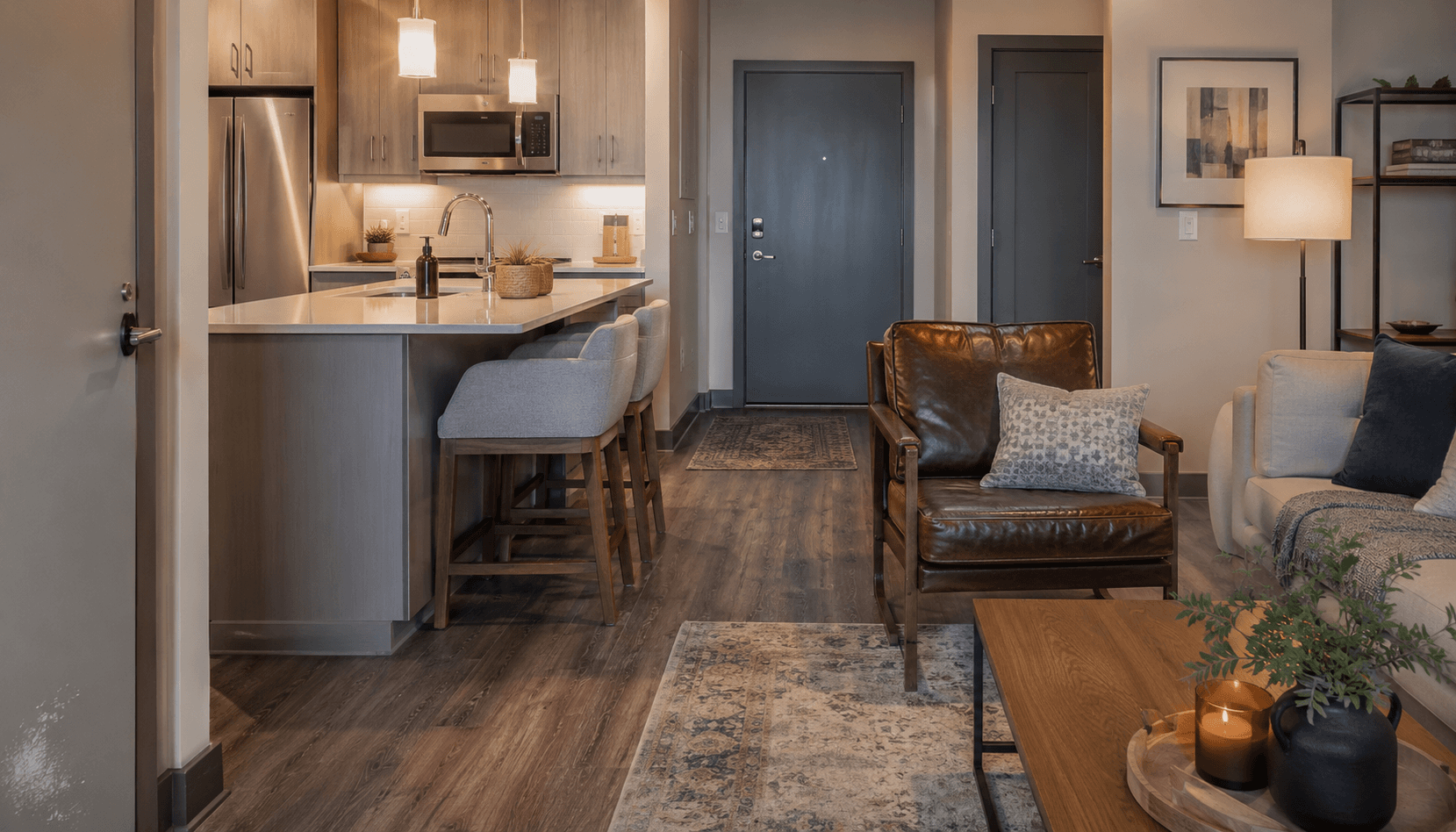
A multifamily unit can look excellent on handover and start feeling tired surprisingly quickly. Cabinet edges chip. Upholstery stains. Hardware loosens. Flooring fails first at the door. The next turnover arrives, and the maintenance team is back to patching the same weak points.
It is easy to blame residents or call it normal wear and tear. But recurring failure is usually a design and specification problem. A product may be perfectly acceptable in a lightly used home and completely wrong for a rental unit that sees frequent moves, professional cleaning, maintenance access and changing household needs.
HUD's durability guidance makes the broader point clearly: poor durability raises operating and maintenance costs and can weaken long-term asset value. Sustainability does not mean much if a space has to be repaired or replaced long before it should.
Why the Damage Shows Up Early
The warning signs often begin before procurement. The design team selects for appearance. The buyer compares first price and lead time. The operator inherits the result. No one owns the full life of the interior.
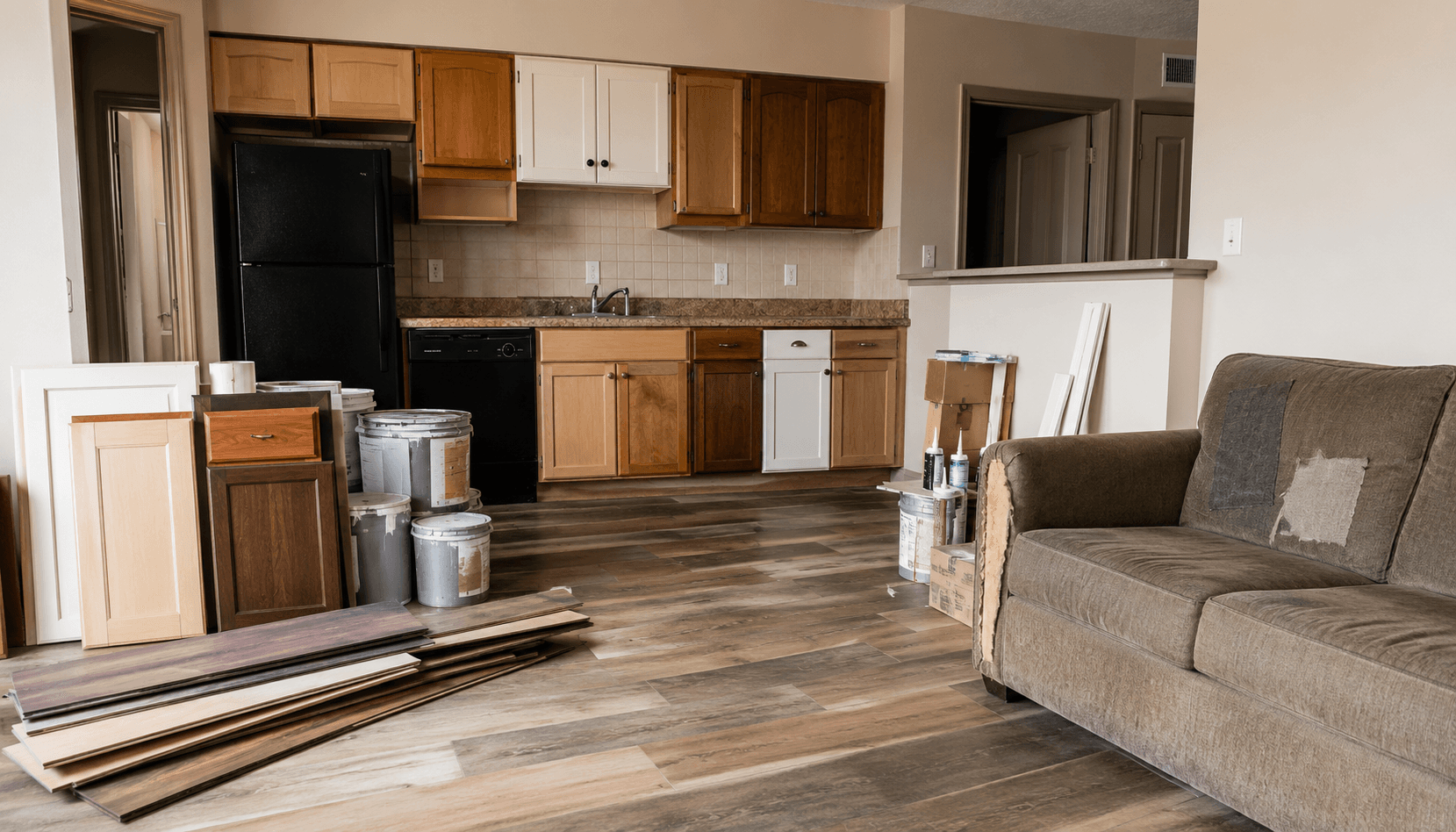
The recurring weak points discovered during a turnover inspection.
That disconnect shows up in familiar ways:
- Residential-grade products are used where commercial or high-cycle performance is needed.
- Edges, corners, seams and hardware are chosen without considering repeated impact and cleaning.
- The visible finish is replaceable only as part of a much larger assembly.
- Products are approved without checking repair instructions, spare parts or future availability.
- Maintenance and property teams are consulted after the decisions are already locked.
The Conventional Fix: Patch, Replace, Repeat
When a finish fails, the fastest response is usually a local repair or a like-for-like replacement. That solves the immediate turnover problem, but it does not correct the reason the failure happened. The same product goes back into the same condition and the cycle starts again.
Small decisions then compound. One cabinet front no longer matches the others. A discontinued floor creates patchwork. A sofa is discarded because its cover cannot be removed. Maintenance stores several generations of hardware because every renovation introduced a different system.
The unit may still rent, but the portfolio becomes harder and more expensive to operate. Waste grows quietly because it is spread across hundreds of minor work orders rather than one dramatic capital project.
Design for the Actual Life of the Unit
A more resilient interior starts by mapping how the space will really be used—not how it looks in the render. Pay close attention to entrances, kitchen corners, bathroom vanities, movable furniture, shared amenity spaces and every surface touched during a turnover.
Then make durability part of the design language:
- Use replaceable fronts, covers and wear components instead of sealed assemblies.
- Standardize hardware and finish families across units so repairs stay simple and consistent.
- Choose surfaces for the cleaning products and methods the property actually uses.
- Protect high-contact edges with better detailing—not just thicker material.
- Mock up the most vulnerable junctions and test them before repeating the detail across the building.
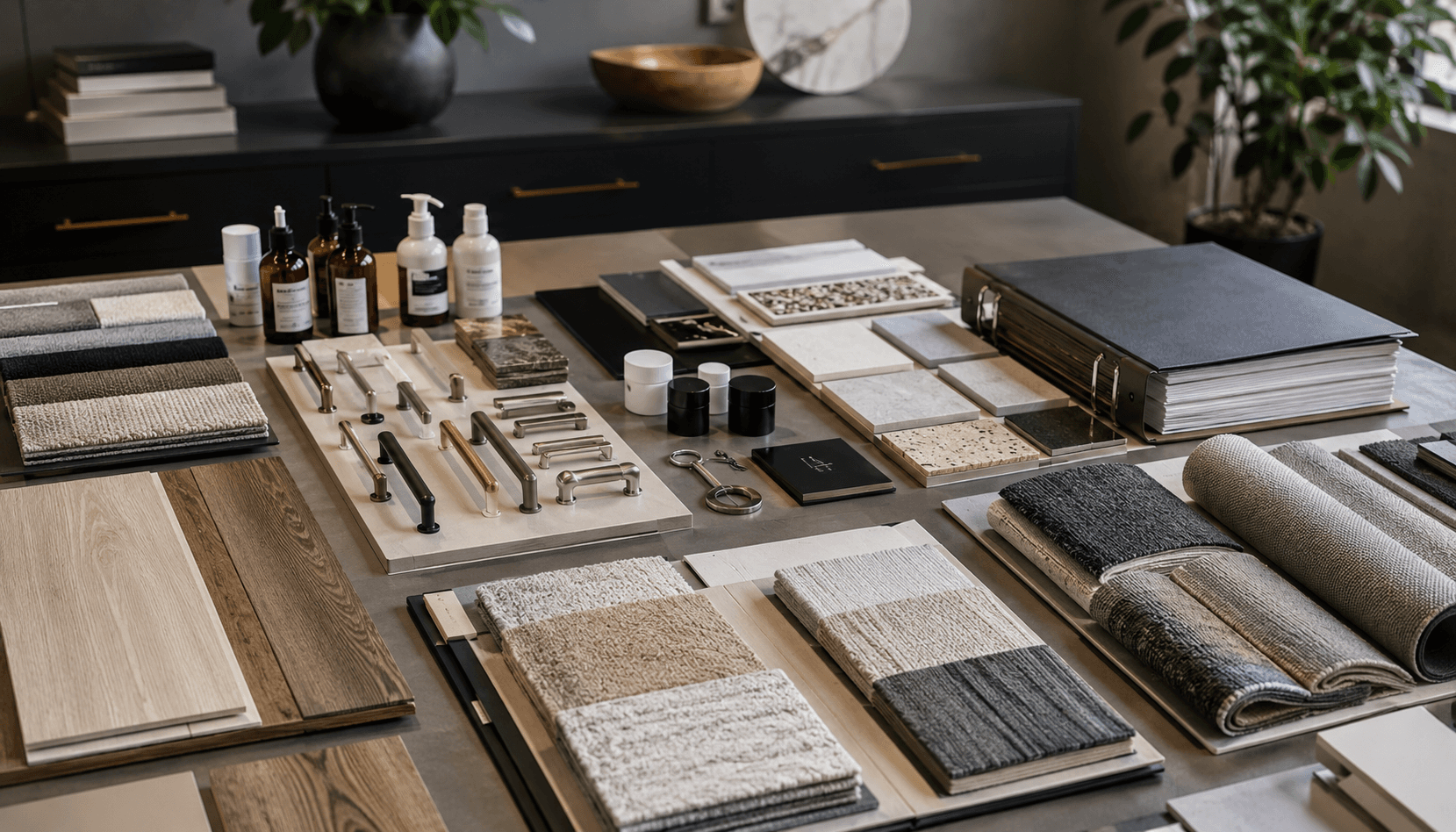
Elegant repairable and replaceable components in a multifamily unit.
Procurement Has to Protect the Specification
A good detail can still fail when it is substituted during purchasing. 'Comparable' is not enough when the substitute has a weaker finish, no replacement parts or a different cleaning limitation.
Procurement documents should ask for the evidence behind performance claims: applicable durability tests, recommended cleaners, abrasion or impact resistance, warranty exclusions, spare-part availability, repair instructions and realistic replenishment lead times. BIFMA standards, for example, provide test methods for the strength and durability of several furniture categories. The standard does not choose the product for you, but it gives the comparison a firmer basis.
The same discipline should apply to flooring, coatings, millwork hardware and textiles. The goal is not to specify the most expensive item. It is to specify the lowest-risk item that can perform, be maintained and be repaired within the operating reality of the property.
What Changes When Durability Is Designed In
The first benefit is fewer avoidable replacements. The second is a smoother turnover because maintenance knows the materials, parts and repair methods. The third is consistency: units do not slowly become a collection of mismatched fixes.
There is also a sustainability benefit. EPA's sustainable-materials guidance encourages a life-cycle view, including durability, maintenance, reuse and disassembly. RICS whole-life guidance likewise treats repair and replacement as part of the impact of a built asset—not as something outside the original design decision.
The exact financial result will vary by portfolio, product, labour market and turnover pattern. But the direction is straightforward: when interiors last longer and can be repaired in parts, owners buy less, discard less and lose less time between residents.

A completed resilient amenity space that still feels warm and residential.
“Recurring failure is usually a design and specification problem—not proof that residents are the problem.”
Five Questions Before You Approve the Finish Schedule
Before signing off the next unit or amenity-space package, ask:
- 1. What fails most often in our current units—and why?
- 2. Can the worn component be replaced without discarding the whole product?
- 3. Has the finish been evaluated for the cleaning, impact and moisture conditions it will face?
- 4. Will replacement parts and matching materials still be available in three to five years?
- 5. Has maintenance reviewed the detail before it is approved?
At a glance
- 1
Why interiors fail early
- 2
How design and procurement create the durability gap
- 3
How repairable details reduce turnover waste and protect value
Sources & further reading
Stay Inspired.
Stay Informed.
We respect your privacy. Unsubscribe anytime.